استراحت در شهر گراتس
The Chapel of Rest in Graz / HOFRICHTER-RITTER Architects
© Karl Heinz Putz
Architects: HOFRICHTER-RITTER Architects
Location: Graz, Austria
Completion: 2011
Photographs: Karl Heinz Putz

© Karl Heinz Putz
“Father, into your hands I commend my spirit” (Luke 23:46)
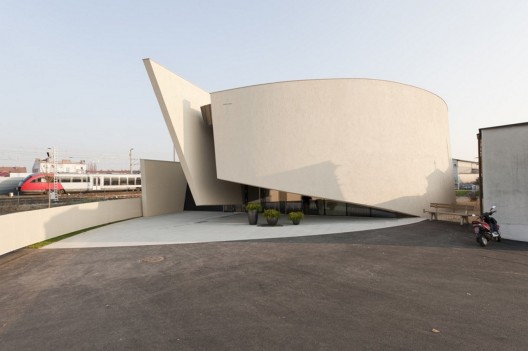
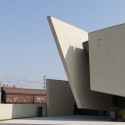
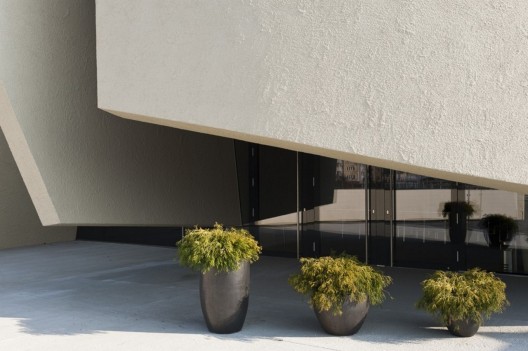
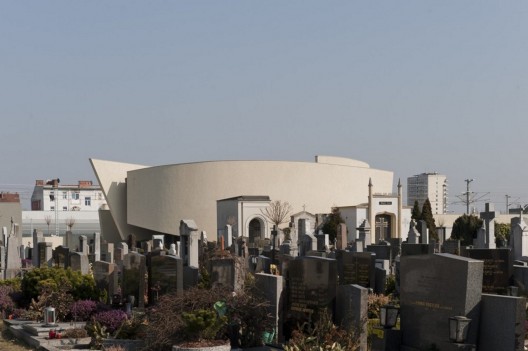
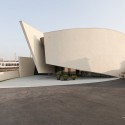
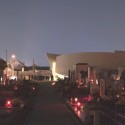
The chapel of rest for the Steinfeld cemetery is designed in the form of
two curving formwork elements made of reinforced concrete and appearing
as two carefully receptive hands. It is the centrepiece of the
redesigned Cemetery Centre which was begun by the municipal parish of
Graz under episcopal vicar Dr Heinrich Schnuderl, continued by Christian
Leibnitz, the new municipal parish provost, and finally built to a
design by Hofrichter-Ritter Architects in 2011.
© Karl Heinz Putz
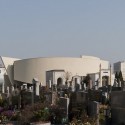
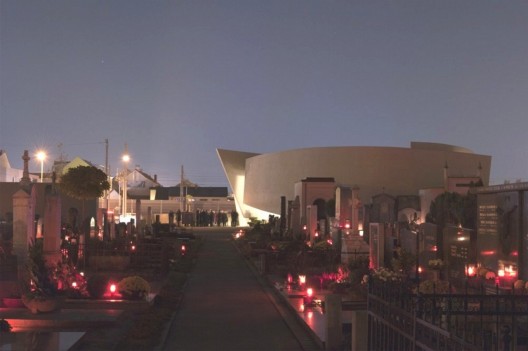
From the perspective of urban development the building site had become a peripheral location due to the construction of the new, exclusively pedestrian tunnel underneath the railway line. Upgrading the site and, as a result, the Steinfeld cemetery was a matter of importance for Graz’s urban planners. Consequently, the cemetery has regained its significance as a public space and park.
© Karl Heinz Putz
A new concept for taking final leave of deceased loved ones has been developed in dignified and pleasant surroundings:
1. The chapel of rest serves as a chapel of rest and place of final blessing in one.
2. After the farewell ceremony the deceased is accompanied in a funeral
procession through a separate entrance out of the building to the burial
ground.
3. Due to increased demand on the part of the bereaved members of the
family, technical multimedia facilities enable the farewell ceremony to
be arranged in a highly individual way, if so required.
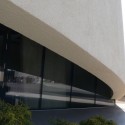
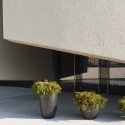
Depending on the particular choice of seating arrangement, the chapel of rest can accommodate up to about 100 people. In special cases larger funerals can also be held by opening up the northern glass wall and by using the spacious dimensions of the open forecourt. Cultural events may also take place at this site. Vital ancillary and service rooms have been positioned in the eastern part of the hall to facilitate smooth operations at the cemetery. These rooms are encompassed by a wall which runs along the length of the road and also acts as a necessary noise barrier to the Südbahn railway line. To the south, the wall goes on to define a green area with a columbarium grove and wall and with urn graves. Amenities such as a florist, stonemason, phone box and a public toilet are also situated right at the forecourt.
© Karl Heinz Putz
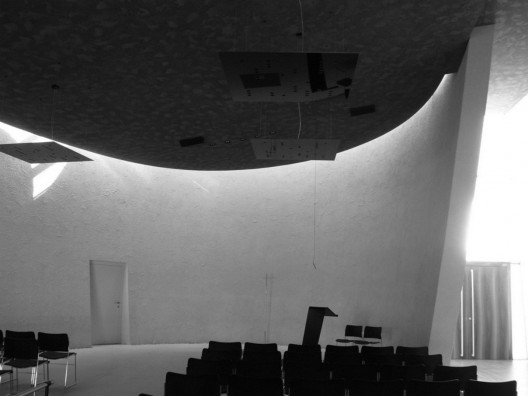
The chapel of rest:
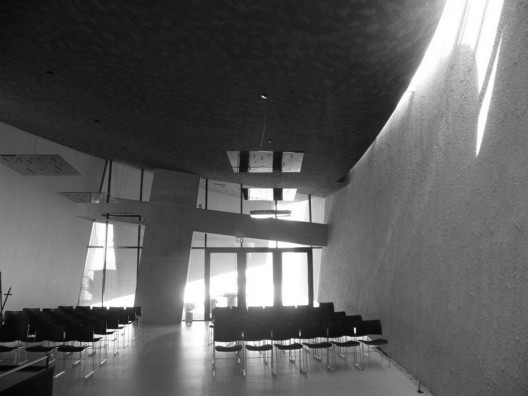
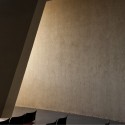
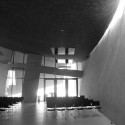
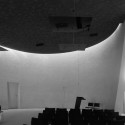
The area for the farewell ceremony is regarded as the key space: the
central location, size and above all the height of the room makes it the
heart of the service centre. This space is used in three phases. These
can be staged differently, depending on how the room has been arranged,
especially with regard to the openings and lighting effects. The
sequence is as follows: laying out – farewell – accompaniment of the
deceased to the burial ground. An approx. 150 m² chapel of rest,
surrounded by two shell-like walls (see ground plan) with a ceiling
height of about 4.80-5.0 m, forms the main structural element of the
building. An overlap between the two shells hides the view of the exit
to the columbarium grove and cemetery grounds.
© Karl Heinz Putz
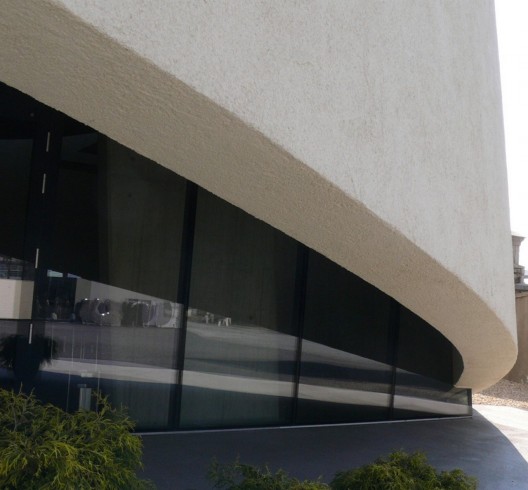
Ancillary rooms:
The ancillary rooms used for running all of the cemetery’s operations
and arranging funerals are joined to one side of the chapel of rest.
They consist of the rooms required for the funeral (lounge, preparation,
work room, store room and frigidarium), for the priest and for the
cemetery’s administrative staff. These rooms cover a total area of about
120 m². The outer wall of the ancillary rooms described above is formed
by the “new cemetery wall”.
© Karl Heinz Putz
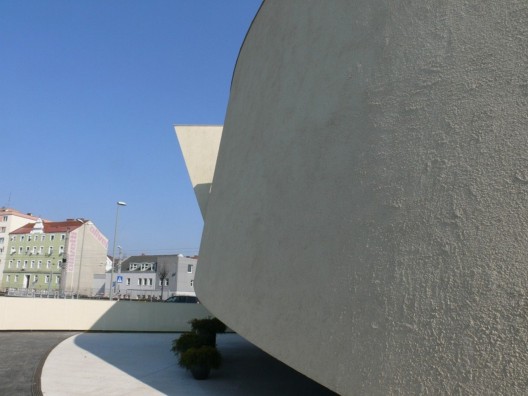
Cemetery wall:
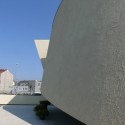
The intention is to build a new cemetery wall flanking the ancillary
rooms and the new columbarium grove. Much of it will form the outer wall
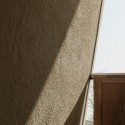
of the ancillary rooms. Made of white concrete, this wall features
different slants: where it performs a space-enclosing function, the wall
slants towards the building; where it has the sole function of a
“boundary wall” it slants away from the site (cf. photo of model).
A second, relatively small structure has also been included in the overall design; it accommodates two small business premises and a public toilet. This structure has not been included in the layout review (see p. 3).
Support structure planning:
Special attention should be paid to the sensitive design of the main
area with formwork slanting outwards (also with projecting ends) and
rooflights for diffuse lighting. Surfaces and materials should match the
intended purpose of the space. We assume a cantilever ceiling with a
span of up to 11.5 m. The cemetery wall and partitions in the area
around the ancillary rooms serve as a backbone and bracing element.
Here, special care needs to be taken with regard to the building physics
and correct deployment of materials. Large components of the complex
should be completed in fairfaced concrete.
© Karl Heinz Putz
HVAC:
Temperatures in the chapel of rest should not exceed 14°C in the cold
months while all ancillary rooms should be kept at normal room
temperature. Measures to prevent overheating in summer should also be
taken into consideration as an important construction priority. Electric
power and gas connections are located in the street close to the site;
the district heating connection is situated on the other side of the
railway tracks – an extension of the district heating supply to the
Südbahnstraße needs to be arranged with the Graz city authority.
Although the precise number of sanitary facilities required for the area around the ancillary rooms still needs to be established, we currently assume that one sanitary block will be needed. Deployment of a ventilation system still needs to be clarified. We currently assume that there is no need to install a ventilation system. A further intention is to build a frigidarium for storing a maximum of two coffins.
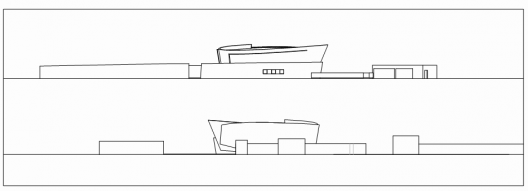
elevations
Electro-technical systems:
The staging of the above mentioned sequence of a funeral is supported in
this case by the use of carefully controlled lighting effects.
Background music and a microphone with speakers complement the
facilities in the main room as does the opportunity to use multimedia,
e.g. for video and image projections. A telecommunications system needs
to be installed in the administration rooms together with technical
connections for the above-mentioned frigidarium.
Acoustics:
Accompanying planning of an acoustics system in order to achieve a pleasant acoustic atmosphere is absolutely necessary.
-
- © Karl Heinz Putz
-
- © Karl Heinz Putz
-
- © Karl Heinz Putz
-
- © Karl Heinz Putz
-
- © Karl Heinz Putz
-
- © Karl Heinz Putz
-
- © Karl Heinz Putz
-
- © Karl Heinz Putz
-
- © Karl Heinz Putz
-
- © Karl Heinz Putz
-
- © Karl Heinz Putz
-
- © Karl Heinz Putz
-
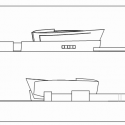
- elevations
-
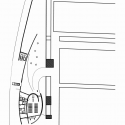
- ground floor plan 01
-
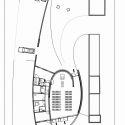
- ground floor plan 02
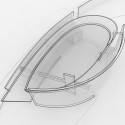
- schematic view